
 EN


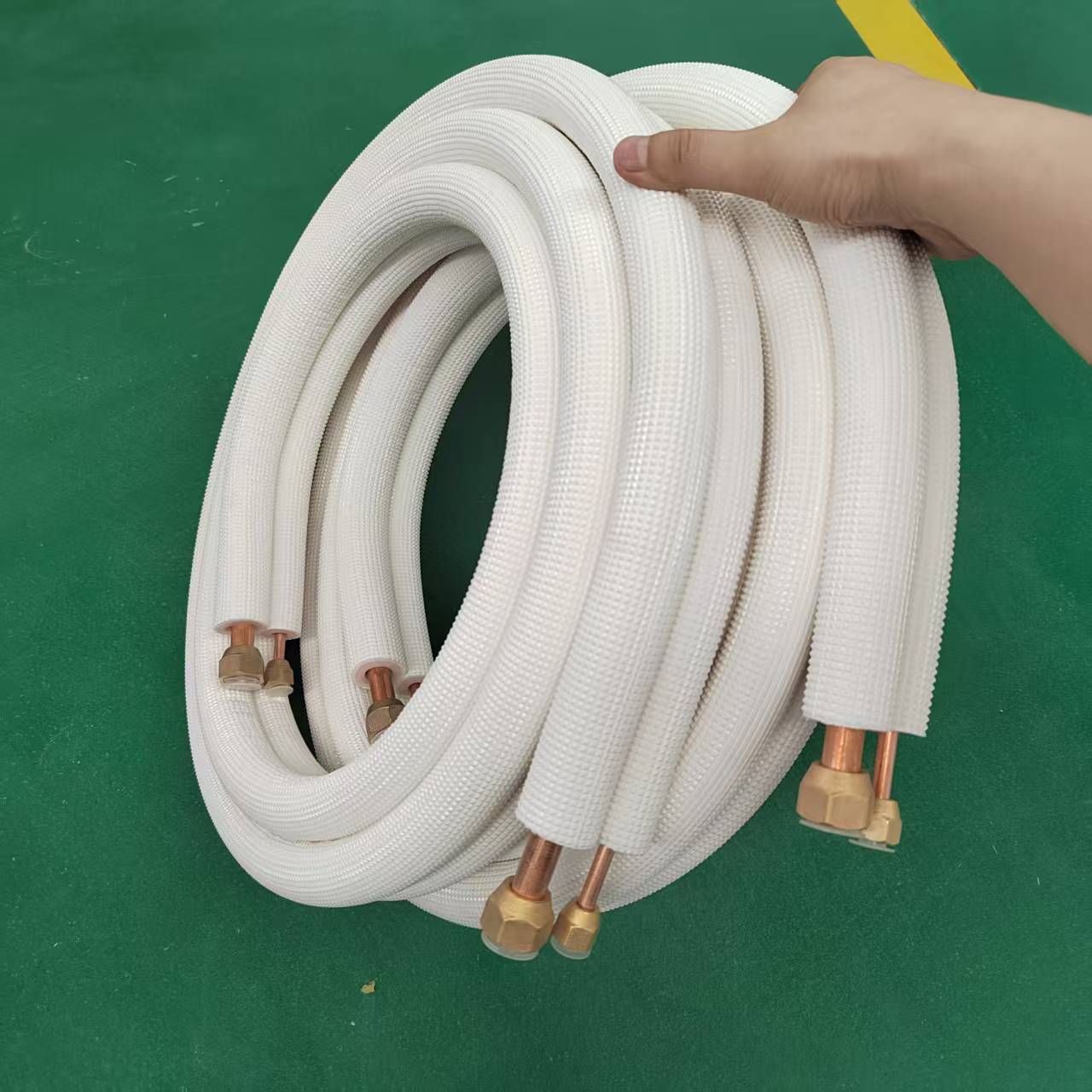
A 50ft line set can be heavy, awkward to control, and vulnerable to damage if pulled straight from the coil. The safest approach is to prepare a clear work area, support the tubing, and open the coil gradually rather than forcing it into a straight line. Careful handling of a 50ft line set helps protect the copper and insulation before installation begins.

This guide explains a controlled, practical workflow for unrolling and straightening a 50ft line set without sharp bends. The goal is not to make every section perfectly rigid; it is to remove the coil’s curve progressively while preserving a smooth radius. Before handling a 50ft line set, confirm the product instructions and plan the route from the coil to the work position.
Prepare the Work Area and Coil
Check the route before moving the tubing
Clear a path long enough for the 50ft line set to extend without crossing sharp edges, debris, tools, or vehicle traffic. Keep the coil on a stable, level surface and identify where the far end will be guided. A 50ft line set can snag on a corner during unwinding, so move obstructions instead of dragging the tubing around them.
Check the intended route for tight turns and decide where a helper can safely stand. If the line must pass through a wall or opening, protect the edge and make sure the opening will not scrape the insulation. Keep the 50ft line set away from hot work, sparks, and sharp metal. A clear route makes it easier to notice resistance before it becomes a damaging pull.
Inspect packaging and identify the free end
Read the product handling guidance and inspect the coil for crushed insulation, exposed tubing, or signs of impact. Remove packaging carefully without cutting toward the copper or insulation. Locate the free end of the 50ft line set and note how the coil is wound. This simple check helps prevent twisting the line or pulling from a trapped section.
Keep caps or protective covers in place where provided, and do not use the fittings as handles. If packaging binds the turns, release it in stages so the coil remains controlled. A 50ft line set should not be dropped, stepped on, or lifted by one end alone. If the coil feels difficult to manage, reposition it or ask another person to assist.
Unroll the Line Set Under Control
Feed the coil instead of pulling against it
Place the coil on its edge if the product guidance allows, then let it rotate as you feed the free end along the prepared route. Keep one person near the coil to control its movement and another to guide the line when needed. This method lets a 50ft line set open gradually, rather than forcing a stationary coil to release under tension.
Use steady, light pressure and pause whenever the tubing catches or the coil begins to spring open unevenly. Find the snag and free it by repositioning the turns, not by yanking the free end. A 50ft line set can develop a small bend quickly when tension is concentrated at one point. Slow progress is preferable to an abrupt pull that may deform the copper.
Support the tubing and control its bend radius
Support the released section at several points, especially near the coil and wherever the route changes direction. Avoid allowing the 50ft line set to hang from the free end or rest on a sharp floor edge. When turning it, use a broad, gradual curve and distribute the movement along the tubing rather than bending at one isolated point.
Do not twist the line to make it match the route, and do not pull one tube independently if the product contains paired tubing. Keep the insulation from being crushed under hands, footwear, or equipment. For a 50ft line set, a helper can guide the leading end while another person manages the coil. Clear communication helps both people stop together if resistance appears.
Straighten Gradually and Verify Condition
Work out the coil memory in short sections
Once the 50ft line set is extended, address the remaining curve in manageable sections. Hold a section with both hands and guide it toward a straighter alignment using broad movements. Do not brace the tubing against a knee, wall corner, or tool. The objective is a gentle correction of the coil memory, not a forceful bend in the opposite direction.
Move along the line in sequence, supporting the area before and after each curve as you adjust it. If a section resists, release pressure and check for a snag or twist. Repeatedly flexing the same point can weaken or flatten a 50ft line set. Keep the tubing’s natural curve where the installation route permits, because a smooth bend is safer than demanding a perfectly straight run.
Inspect for kinks before installation
Look along the full 50ft line set in good light, checking for flattened areas, sharp creases, deep dents, damaged insulation, or exposed copper. Pay particular attention to the coil ends and any points that caught during unwinding. A smooth surface and consistent profile are useful visual checks, but they do not replace product guidance or qualified inspection when damage is suspected.
If you find a visible kink, do not assume it can be repaired by bending the tube back. Stop handling that section and follow the manufacturer’s instructions or consult a qualified HVAC professional about whether the line is suitable for use. Protect the 50ft line set while moving it to the installation area, and avoid tying it tightly or stacking heavy materials on top.
FAQ
Can one person unroll a 50ft line set?
It may be possible when the coil is manageable and the route is clear, but a helper improves control. One person can feed the 50ft line set while another guides the free end and watches for snags. If the coil shifts, binds, or feels too heavy to control safely, stop and get assistance rather than pulling harder.
Should I use a tool to straighten the tubing?
Use only tools and procedures approved for the specific product. Improvised clamps, leverage, or sharp-edged tools can flatten or score the tubing and damage the insulation. For a 50ft line set, careful hand guidance and support are generally the safer starting point; consult product instructions if a dedicated straightening method is specified.
What should I do if I discover a kink?
Stop applying force and assess the damage without repeatedly flexing the area. A sharp crease or flattened section may compromise the 50ft line set, and simply reshaping it may not restore its condition. Follow the manufacturer’s guidance and seek qualified advice before installation, particularly if the copper or insulation appears damaged.